Control that converts: how device management protected Jusbrasil’s revenue and boosted profits by ~20%
Year
2025
Collaborators
Product Managers, Engineers, Business Strategists
Role
Product Designer
Status
Experiment
Context & Challenge
Everyone loves to share…But what if sharing accounts is holding back your growth?
At Jusbrasil, I was responsible for solving a complex problem: Account Sharing and drop in revenue. Over the past few years, qualitative data have indicated that account sharing may be a problem. In 2025, we decided to investigate further and discover some curious things:
Over 80% of paying users accessed their accounts from more than two devices, and device usage increased in direct proportion to the number of page views.
What seemed like engagement was actually revenue leakage. The challenge was to protect monetization without harming legitimate users.
Problem & Solution
Problem Space
The usage metrics that we discover could be for two reasons:
Legitimate subscribers, using multiple devices.
More than one user is using the same subscriber account.
So we have to cover two problems; prevent collective usage while maintaining fair and transparent access. Avoid churn from legitimate multi-device users.
Solution space
The solution we implemented involved controlling device access and aligning with an additional self-service B2B buying journey:
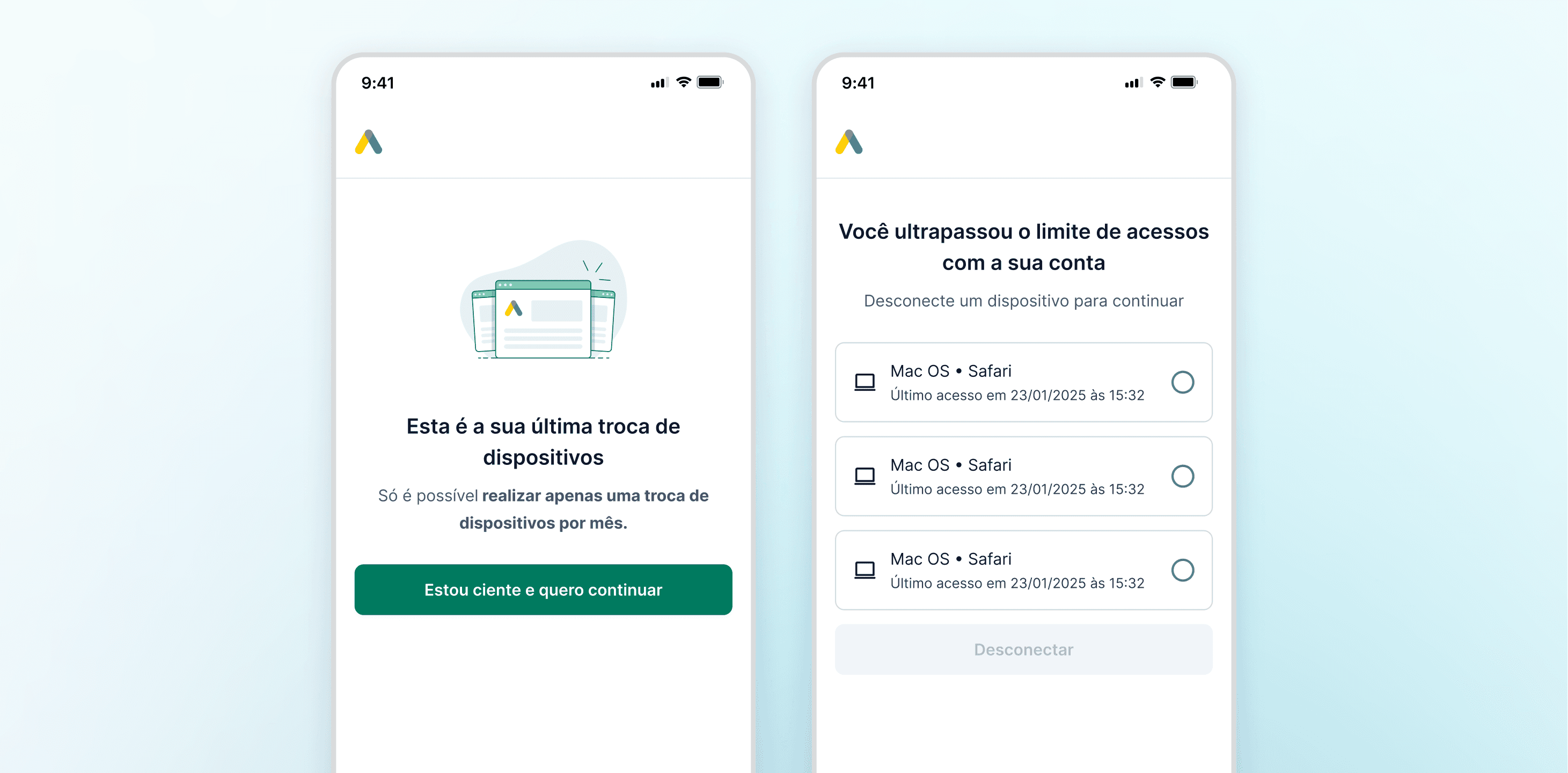
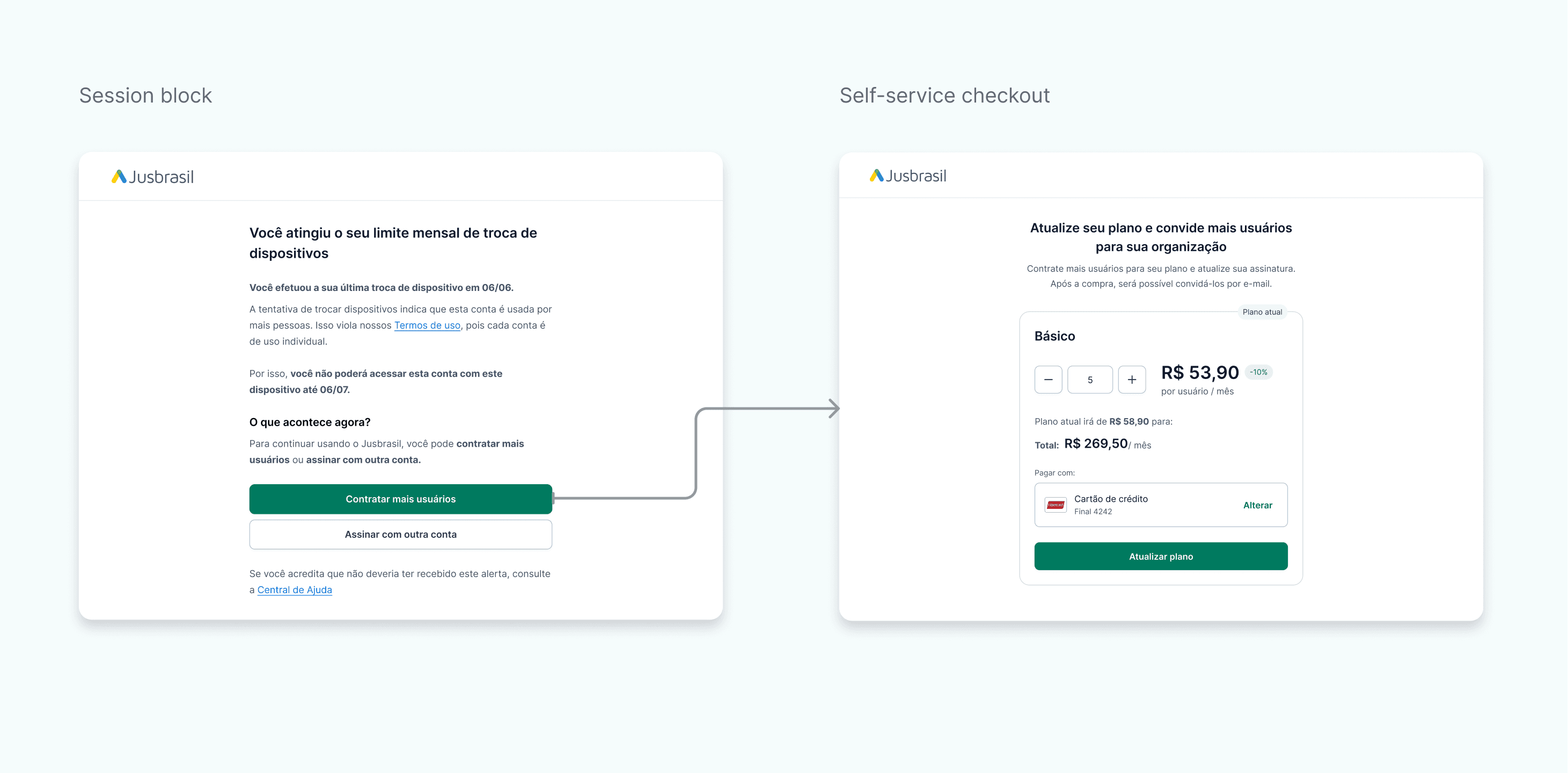
Each account could switch to a new device once per month; exceeding this limit would result in a one-month block on the account.
Aligning with the device control, users can instantly buy additional seats when they reach the limit, thereby freeing up space to avoid blocking.
After the purchase, we introduced a new, separate seat management area where admins could assign users and manage seats.

My Approach
The Design Process: How I Developed the Solution.
Behavioral data analysis
Behavioral data helped us define a fair friction threshold by analyzing device switching frequency and session overlap. We could map a behavior pattern that aligns with account sharing and scope the problem's size.
Mapping the problem
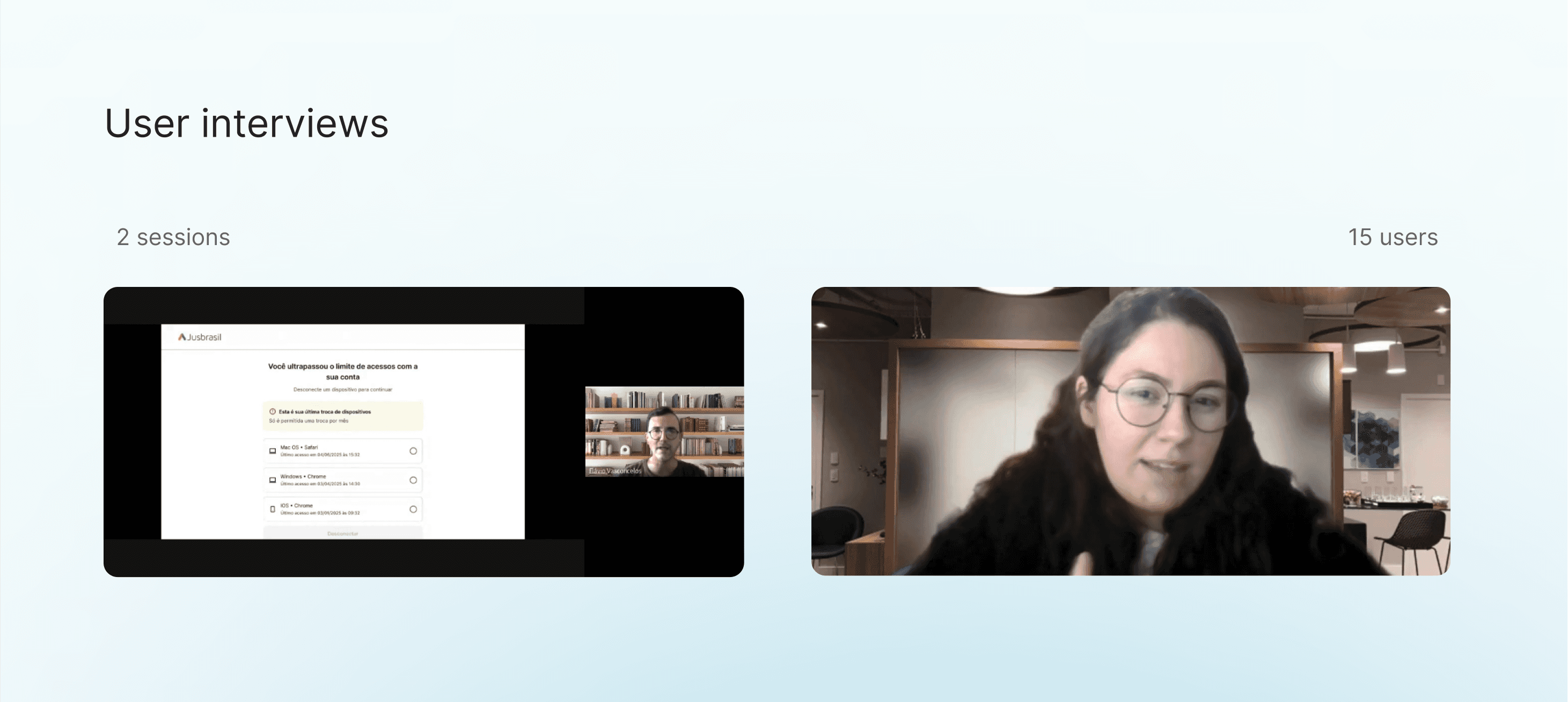
Conversations with solo professionals and small law firms revealed that sharing often occurred out of convenience or a lack of clarity about team or enterprise plans, not only due to malicious intent. These insights led us to create a self-service buying journey within device control, enabling users to manage additional seats and reduce unauthorized sharing easily.
Designing the solution
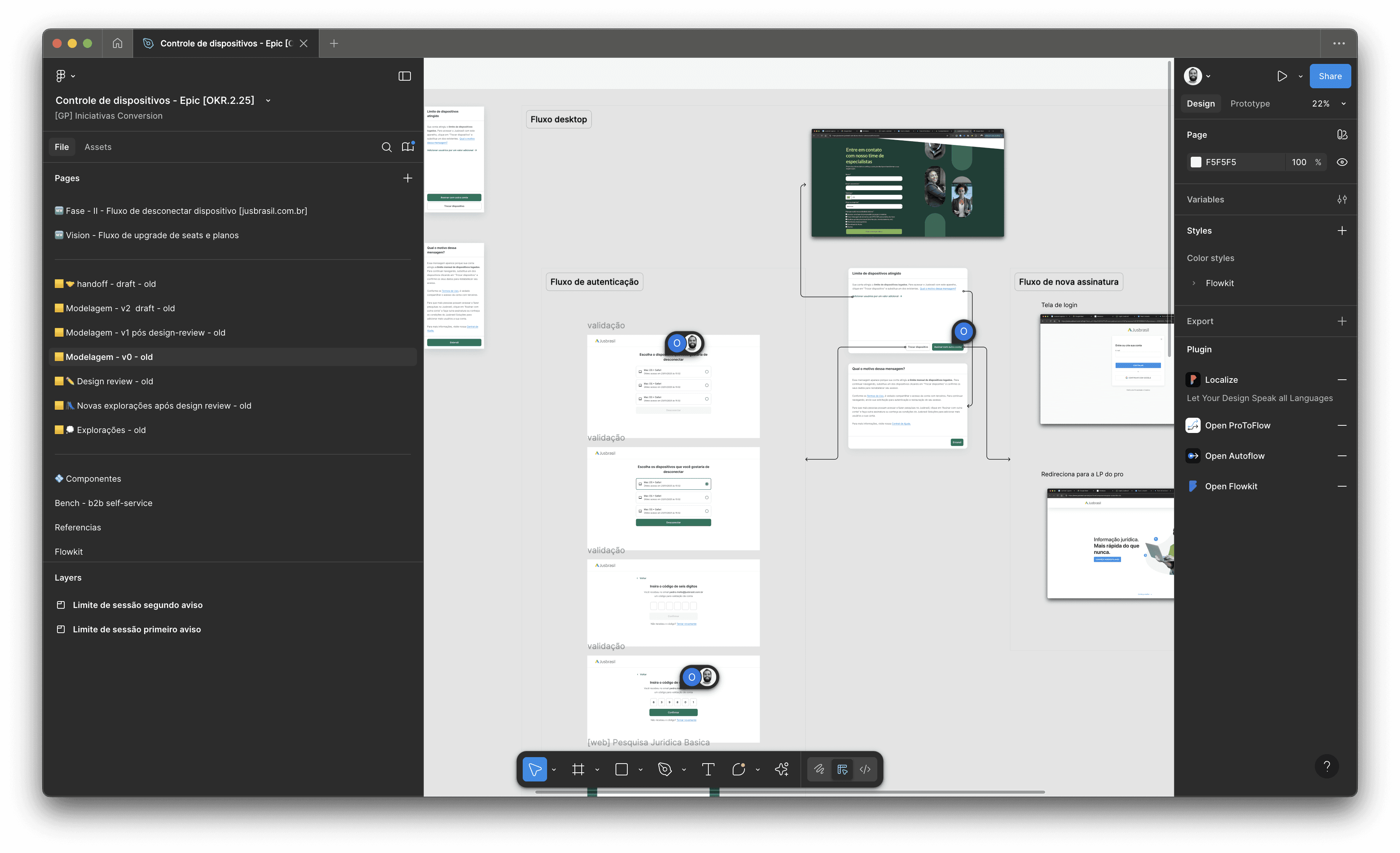
I began exploring different alternatives to find the best solution to our problem. This process wasn't linear; testing and iterating on high-fidelity prototypes with real users revealed the importance of guiding the correct copy and the proper flow. After conducting sessions with stakeholders and users, I refined the concept into a final version ready for A/B testing.
Results from the first experiment
+20%
increase in revenue
+50%
of shared accounts are blocked.
My Impact
As Product Designer, I led the end-to-end design process
Conducted user interviews and behavioral analysis to shape the friction strategy.
Designed the device control experience, self-service upgrade flow, and seat management tool.
Worked with Engineering on usage heuristics and Growth on pricing communication.
It was a cross-functional effort that combined product thinking, data, and empathy to create a sustainable monetization model, which boosted business profits.